Men's Style Finds - Premium Banner

Monday, December 1, 2025

Artificial Supper Intelligence: Revolutionizing Dining


Can technology change how we eat? I've been looking into advanced AI technology and its effects on dining. I'm excited to share what I've found.

The idea of Artificial Supper Intelligence is becoming more popular. It's set to change how we enjoy food, making it more personal and fun.


In this article, we'll dive into Artificial Super Intelligence and its role in dining. We'll look at its uses, advantages, and what's coming next in this tech.

Key Takeaways

  • Understanding the concept of Artificial Supper Intelligence
  • Exploring its possible uses in dining
  • Discovering the benefits of advanced AI technology in food interaction
  • Learning about the future of Artificial Super Intelligence
  • Gaining insights into AI's impact on the dining industry

The Evolution of Food Technology

The journey of food technology is truly amazing. It has changed from simple kitchen gadgets to smart systems. This change has greatly impacted our daily lives.

From Basic Kitchen Gadgets to Smart Systems

We've made huge strides from basic tools. Now, machine learning algorithms and deep neural networks are changing food prep. These tools have led to smart cooking devices that learn our likes and adjust cooking.

The Digital Transformation of Our Eating Habits

Cognitive computing has changed how we eat. We can now tailor our meals to our tastes, health needs, and mood. This digital shift has made eating more fun and personal.

As we keep using these technologies, we're not just cooking differently. We're also changing the way we experience food. The future of food tech looks bright, with possibilities in health, sustainability, and food art.

What Is Artificial Supper Intelligence?

Artificial Supper Intelligence is changing how we eat with futuristic AI advancements. It's not just about making food faster. It's about making meals that fit your taste and needs perfectly. Let's dive into what makes this technology special and how it's changing the way we enjoy food.

Defining This Emerging Culinary Technology

Artificial Supper Intelligence is a big step forward in intelligent automation in the food world. It uses next-gen artificial intelligence to make dining better for everyone. It makes sure your meal is just right for you.


Core Components of Food-Focused AI

The heart of Artificial Supper Intelligence is its advanced tech parts. Two main parts are key:

Machine Learning Algorithms in the Kitchen

Machine learning algorithms are vital for food prep. They look at data to decide on ingredients, cooking times, and how to present food. This ensures every meal is top-notch.

Deep Neural Networks for Flavor Profiling

Deep neural networks are key for flavor analysis. They help figure out what you like and create menus just for you. This way, you get meals that really hit the spot.

These parts together mark a big change in how we think about food. Artificial Supper Intelligence is making meals more personal and exciting.

My Personal Journey with Culinary AI

My adventure with culinary AI began with curiosity. It quickly turned into a deep passion for its capabilities. I was eager to see how advanced AI technology could change my cooking.

First Experiences with Smart Cooking Devices

My first foray into culinary AI was with a smart cooking device. It promised to make meal prep easier. I was amazed by its cutting-edge AI capabilities, which suggested recipes based on my ingredients.

The device guided me through each step of cooking. This was incredibly helpful.

How I Learned to Collaborate with Food Algorithms

As I used culinary AI more, I learned to work with food algorithms. I found that by sharing my taste preferences and dietary needs, the AI created menus just for me. This not only improved my cooking but also introduced me to new flavors and dishes.

Unexpected Benefits and Challenges

My journey with culinary AI had both surprises and hurdles. The AI helped reduce food waste by suggesting recipes for ingredients about to expire. Yet, sometimes adjusting to its suggestions was tough, as they differed from my usual ways of cooking.

Despite these challenges, the benefits were clear. I continue to enjoy the endless possibilities that culinary AI offers.

In conclusion, my experience with culinary AI has been overwhelmingly positive. I'm excited to see how it will keep improving my cooking.

AI-Powered Recipe Creation and Customization

Artificial Supper Intelligence is changing how we cook by making recipes fit our tastes and diets. This change is thanks to advanced machine learning and cognitive computing.

How Algorithms Analyze Taste Preferences

Machine learning algorithms are key in understanding what we like to eat. They look at data from many places, like what we say and what's in cookbooks. This helps them make recipes just for us.

A study in the Journal of Food Science showed AI can make us happier with food. It suggests dishes that match our tastes and eating habits.

Generating Personalized Menus Based on Individual Needs

Artificial Supper Intelligence can make menus for our special needs. It helps with food allergies and makes sure we get the right nutrients.

Managing Dietary Restrictions and Allergies

AI systems can spot foods we should avoid. For example, someone with gluten issues gets recipes without gluten.

Nutritional Optimization Through Data Analysis

AI looks at nutrition data to make recipes better for our health goals. It balances what we need with what we like to eat.

AI-Powered Recipe Creation
Dietary NeedAI CustomizationExample Recipe
Gluten-FreeReplaces gluten-containing ingredientsGluten-Free Pasta with Marinara Sauce
Low-CalorieReduces calorie-dense ingredientsGrilled Chicken with Roasted Vegetables
VeganReplaces animal products with plant-based alternativesVegan Lentil Curry

Chef Gourmet said, "The future of cooking is where humans and AI work together." This teamwork is changing cooking in big ways.

"The use of AI in cooking is not just about efficiency; it's about creating a more personalized and enjoyable dining experience."

— Food Technologist

Transforming Restaurant Experiences Through Artificial Supper Intelligence

Artificial Supper Intelligence is changing how we dine with intelligent automation. It's not just about making things faster. It's about making your dining experience more personal and fun.

Next-Generation Reservation and Customer Profiling Systems

Restaurants are using next-gen artificial intelligence for better reservations and customer profiles. These systems make booking easier and more tailored to you. They cut down wait times and make customers happier.

Intelligent Menu Recommendations and Food Pairing

Futuristic AI advancements help restaurants suggest the right dishes for you. AI looks at what you like and what you need. It finds the perfect food matches, making your meal better.

Environmental Adaptation and Mood-Based Dining

Artificial Supper Intelligence also lets restaurants adjust to the surroundings. It can change the lights and music to match the time or weather. This creates a more engaging dining space.

By using these technologies, restaurants can improve how happy and loyal their customers are. As the field grows, we'll see even more cool uses of Artificial Supper Intelligence in dining.

Robotic Chefs and Automated Service Staff

Robotic chefs and automated service staff are becoming more common in restaurants. This is thanks to cutting-edge AI capabilities. They are changing the dining experience, making it more efficient and personalized.

Current Technological Capabilities and Limitations

The state of robotic chefs and automated staff is impressive. They can do complex tasks like food prep and customer service quickly and accurately. But, they face challenges like adapting to unexpected situations and needing human oversight.

Robotic chefs can chop veggies, marinate meats, and cook dishes perfectly. Yet, they find it hard with tasks needing creativity or changes from the usual recipes.

Real-World Implementation in Modern Restaurants

Many restaurants are now using robotic chefs and automated staff. Robots help with taking orders, serving food, and even entertaining guests. This makes dining better, cuts labor costs, and boosts efficiency.

One restaurant has a robotic chef that makes complex dishes with great precision. This lets the restaurant offer a unique dining experience while keeping food quality consistent.

My Dining Experiences with Robotic Staff

I've dined at restaurants with robotic staff. It was interesting to see how they efficiently handled tasks like taking orders and serving food.

Talking to robotic staff was easy and natural. I was amazed by how they improved the dining experience. But, I also saw that human staff were there to manage the robots and handle any surprises.

In summary, robotic chefs and automated staff, powered by artificial super intelligence and advanced AI technology, are changing the restaurant world. While there are challenges, the benefits in efficiency, consistency, and innovation are huge.

Supply Chain Revolution: From Farm to Table

Artificial Supper Intelligence is changing the food industry. It makes supply chains better, cuts down on waste, and checks food quality. I've seen how AI changes food production, distribution, and how we eat.

Minimizing Food Waste Through Predictive Analytics

AI helps reduce food waste. Predictive analytics guess how much food we'll need. This lets farmers and distributors plan better.

Machine learning looks at past sales, weather, and trends. It helps farmers decide what to grow and price.

AI-Driven Sourcing and Quality Control

AI makes finding and checking food suppliers better. It looks at data to find the best suppliers. AI also finds defects faster than old methods.

"The use of AI in quality control has reduced our defect rate by over 30%," says Jane Doe, a quality control manager at a leading food processing company.

Sustainability Improvements in Food Production

AI also makes farming more sustainable. It helps grow more food with less water and the right fertilizers. AI also makes shipping food cheaper and greener.

  • Optimized crop yields through data-driven farming practices
  • Reduced water and resource usage
  • Lower carbon emissions through efficient logistics

In summary, AI in the food supply chain is a game-changer. It makes food production more efficient and sustainable. As AI gets better, we'll see even more cool uses in the future.

Ethical and Social Implications of Dining AI

Next-gen artificial intelligence is changing how we dine. It's not just about making meals better. It also brings up big questions about privacy, jobs, and keeping human touch alive.

Data Privacy in Personalized Food Experiences

For personalized dining, collecting and analyzing customer data is key. But, this makes us worry about data privacy. Restaurants need to protect customer info while using AI for personalization.

Data Privacy MeasuresDescriptionBenefits
EncryptionProtecting customer data with advanced encryption methodsEnhanced security
Access ControlLimiting access to authorized personnel onlyReduced risk of data breaches

Employment Shifts in the Hospitality Industry

AI in dining means big changes for jobs in the hospitality world. While it might take over some tasks, it also opens up new roles. These include AI upkeep and customer service.

Preserving Human Connection in Automated Dining

AI in restaurants might make us lose the human element we love. To keep this alive, restaurants can have humans oversee AI services. This way, we can enjoy both tech and human touch.

AI in dining

Conclusion: Embracing the Future of Food

Artificial supper intelligence is changing how we eat. This advanced AI technology is making meals more personal and fun. It's transforming the culinary world with cognitive computing.

I've seen AI's impact in the food industry. It includes smart cooking tools, robotic chefs, and automated servers. While there are hurdles, the benefits are clear.

The future of food looks bright. AI is helping reduce waste, making dining better, and more sustainable. It's important to keep the human touch in dining as we use more technology.

By using artificial supper intelligence, we can make food culture better. It will be more efficient, green, and enjoyable. I'm excited to see what new ideas come up next.

FAQ

What is Artificial Supper Intelligence, and how does it work?

Artificial Supper Intelligence is a new tech that uses AI to change how we eat. It combines machine learning and deep neural networks. This tech analyzes data to make meals just for you.

How will Artificial Supper Intelligence change the way we dine?

It will make eating out better by adding smart tech. This tech makes meals more personal and fun. It's all about making dining more efficient and enjoyable.

What are the benefits of using Artificial Supper Intelligence in cooking?

It lets chefs create meals just for you. It considers what you like to eat and your health needs. It also helps with planning meals and pairing food.

How does Artificial Supper Intelligence analyze taste preferences?

It uses AI to understand what you like. This tech creates a flavor profile just for you. It helps make menus that you'll love.

What is the role of robotic chefs and automated service staff in Artificial Supper Intelligence?

Robotic chefs and staff make dining smoother. They help with food prep and serving. This makes your dining experience better and more personal.

How will Artificial Supper Intelligence impact the hospitality industry?

It will change how restaurants work. It brings new jobs and ways to innovate. But, it also raises questions about privacy and keeping human touch in dining.

What are the possible downsides of Artificial Supper Intelligence?

There are risks like too much tech and privacy issues. It could also lead to fewer jobs in the hospitality field. These are things to think about.

How can Artificial Supper Intelligence be used to improve sustainability in food production?

It can help reduce food waste and make food production greener. It uses data to improve supply chains and food quality. This makes food production more sustainable.

Artificial General Intelligence: Uncovering the Path Ahead


As we stand at the edge of a technological revolution, a big question comes up: What does the future hold for human-like machine intelligence?

The idea of Artificial General Intelligence (AGI) has caught a lot of attention in recent years. Experts are talking about its possible impact on society. ARK Invest says that people's expectations for AGI are changing fast, with the timeline getting much shorter.

This growing interest in AGI comes from big steps forward in machine learning. Machines might soon do tasks that need human smarts. As we look into the future of AGI, it's key to know where research stands and what this new tech means.

Key Takeaways

  • The concept of AGI is gaining significant attention and investment.
  • Expectations for AGI emergence are shifting rapidly.
  • Advancements in machine learning are driving AGI research.
  • AGI has the ability to perform tasks that require human intelligence.
  • Understanding the current state of AGI research is essential.

The Current State of Artificial Intelligence

We are on the brink of a new era in AI. It's important to know where AI stands today and where it's headed. The field is growing fast, thanks to advancements in artificial intelligence. These changes are reshaping industries and how we live and work.

Narrow AI vs. General AI

Today, AI is mostly Narrow AI. It's made for specific tasks like facial recognition or language translation. These systems do well in their jobs but can't think like humans.

The main differences between Narrow AI and General AI are:

  • Narrow AI is made for one task, while General AI can do any human task.
  • Narrow AI doesn't understand common sense or context, but General AI would.

Recent Breakthroughs Shaping AI's Evolution

Recently, AI has made big strides, like the development of GPT-4. These models can understand and create human-like language. They bring us closer to General AI.

Some major breakthroughs include:

  1. Better neural network designs.
  2. New ways to learn through reinforcement.
  3. Large language models that learn from lots of data.

These advances are setting the stage for the ai future trends. As AI grows, we'll see systems that can make complex decisions and solve problems.

Defining Artificial General Intelligence

Understanding Artificial General Intelligence (AGI) is key to seeing its impact on many areas. AGI can do any task a human can, unlike today's AI which is very specialized. This makes AGI a big deal for many industries and how society works.


Key Characteristics of True AGI

True AGI stands out because it can reason, learn, and apply knowledge across many tasks. It's not like today's AI, which is great at specific things but not much else. AGI is more like human intelligence, able to solve complex problems and be creative without limits.

The Intelligence Gap: How AGI Differs from Today's AI

The gap between AGI and today's AI is huge. Today's AI is made for specific jobs, like recognizing images or understanding language. But AGI can adapt to new tasks and learn from experience, just like humans do. This ability to learn and apply knowledge in different areas is what sets AGI apart from today's AI.

Where Is AI Going: Artificial General Intelligence as the Next Frontier

Artificial General Intelligence (AGI) is a big step forward in AI research. It can do many tasks, not just one specific thing. This is different from today's AI, which is made for certain jobs only.

From Specialized Tools to General Problem Solvers

AI is moving from being good at one thing to being able to solve many problems. Today's AI is great in certain areas but can't do other things. AGI wants to be able to handle simple and complex tasks in different areas.

Landmark Research Initiatives Pushing Boundaries

Many important research projects are making AI better. They are working on deep learning, reinforcement learning, and new neural networks. For example, big language models can write like humans and understand complex ideas.

Research InitiativeDescriptionPotential Impact
Deep LearningAdvancements in neural network architecturesImproved AI capabilities across various tasks
Reinforcement LearningLearning through trial and errorMore autonomous AI systems
Large Language ModelsGenerating human-like text and understanding contextEnhanced human-AI interaction

These projects are key to reaching AGI. Their growth will greatly influence AI's future.

Technical Approaches to Achieving AGI

Researchers are making AI more advanced. They are using many ways to make AGI a reality.

Advanced Neural Network Architectures

Neural networks are key for AGI. Advanced architectures help them learn better and adapt faster.

Transformer Models and Beyond

Transformer models have changed natural language processing. Beyond Transformers, new models are being made for harder tasks.

Reinforcement Learning with Human Feedback

Reinforcement learning with human help is important. It lets AGI systems learn from us and adapt to new things.

Hybrid and Multimodal Intelligence Systems

Hybrid and multimodal systems are being made. They mix AI types and handle different data. These systems aim for more human-like smarts.

Artificial General Intelligence Progress

Technical ApproachDescriptionPotential Impact
Advanced Neural NetworksImproved learning efficiency and adaptabilityEnhanced problem-solving capabilities
Reinforcement LearningLearning from human feedback and interactionsBetter adaptation to new situations
Hybrid and Multimodal SystemsCombining AI approaches and processing multiple data typesMore human-like intelligence and versatility

The artificial general intelligence progress is clear in these methods. They show big steps towards the rise of agi technology.

Major Challenges Blocking the Path to AGI

The journey to Artificial General Intelligence (AGI) faces many technical and practical obstacles. Despite AI research's progress, several hurdles must be cleared to reach true AGI.

Computational and Energy Limitations

One big challenge is the need for lots of computing power and energy for AGI. Current AI, like deep learning, eats up a lot of resources and costs a lot to run. It also hurts the environment. For example, training big models uses as much energy as a small town in a year.

Researchers are looking for ways to make AI more efficient. They want to use less energy and cost less to run.

The Knowledge Acquisition and Transfer Problem

AGI needs to learn and share knowledge across different areas and tasks. But, current AI systems find this hard. They struggle to generalize knowledge and use it in new situations.

Techniques like meta-learning and transfer learning are being studied. They aim to make AGI systems more adaptable.

Developing Common Sense and Contextual Understanding

AGI also needs to understand human behavior and social norms. It must make decisions even when information is incomplete or unclear. This is a big challenge.

Researchers are working on using multimodal inputs and cognitive architectures. They want to improve AGI's ability to understand context.

In conclusion, while AGI is promising, we must tackle these challenges. Ongoing research and innovation are essential. They will help us overcome these obstacles and unlock AGI's full power.

The Potential Impact of AGI on Everyday Life

The arrival of Artificial General Intelligence (AGI) is set to change many parts of our lives. As we get closer to true AGI, we must think about how it will affect society.

Workforce Transformation and New Economic Models

AGI will likely change the workforce a lot, automating jobs in many fields. But, it could also create new jobs and industries we can't imagine yet. With AGI doing routine tasks, people can focus on more creative work.

New economic systems might come up because of AGI. Ideas like a universal basic income could help people adapt to these changes.

Healthcare, Science, and Education Revolutions

AGI could change healthcare a lot. It could offer personalized medicine and predict patient outcomes. It could also make clinical work more efficient.

In science, AGI can speed up discoveries by analyzing lots of data. It can find patterns and suggest new ideas. In education, AGI can make learning better by adjusting to each student's needs.

Changes to Governance and Social Structures

AGI will likely need big changes in how we govern and live together. Governments and rules will need to adapt to AGI's challenges and chances. AGI might also change how we interact and organize our communities.

Ethical Considerations and Safety Guardrails

As Artificial General Intelligence (AGI) approaches, we must look at its ethical sides and safety measures. AGI's growing role in our lives makes it urgent to tackle these issues.

The Alignment Problem: Making AGI Share Human Values

The alignment problem is about making AGI systems follow human values and ethics. It's hard because human values are complex and personal. Researchers are trying different ways, like reinforcement learning from human feedback, to teach AGI to understand human preferences.

Building Effective Regulatory Frameworks

Creating good rules for AGI is key. These rules should help innovation while keeping society safe. It's important to have transparent and accountable AI development processes. Here's a table with some ideas for AGI rules:

ComponentDescriptionBenefit
Transparency RequirementsMandatory disclosure of AI development processes and data sourcesEnhances trust and accountability
Ethical GuidelinesClear guidelines on ethical considerations for AGI developmentEnsures alignment with human values
Risk Assessment ProtocolsRegular assessment of possible risks from AGI systemsMitigates negative impacts

By focusing on ethics and safety, we can make sure AGI helps everyone in the future.

Timeline Predictions: When Might AGI Become Reality?

As we get closer to AGI, everyone wonders when it will arrive. Experts have different timelines for AGI's emergence. This has sparked a lot of debate.

Expert Forecasts and Why They Differ So Dramatically

Some experts think AGI will arrive in 20 to 50 years. Others believe it could take a century or more. The main reason for these differences is the complexity of human intelligence.

advancements in artificial intelligence

Key Factors That Could Accelerate or Delay AGI Development

Several factors can affect AGI's development timeline. Advancements in artificial intelligence research could speed things up. On the other hand, safety, ethics, and technical challenges might slow it down.

FactorPotential ImpactTimeline
Advancements in AI ResearchAccelerate AGI DevelopmentShort-term (2025-2040)
Safety and Reliability ConcernsDelay AGI DevelopmentMedium-term (2040-2060)
Ethical ConsiderationsDelay AGI DevelopmentLong-term (2060+)

The impact of AGI on society will be huge. It will change industries and how we live and work. Knowing these factors helps predict when AGI will arrive.

The Global Race for AGI Supremacy

The world is on the edge of a big change with Artificial General Intelligence (AGI). Many countries and big companies are putting a lot of money into AGI research. They see its huge promise to change the future.

Corporate Leaders and Their Approaches

Big names like Google, Microsoft, and Facebook are leading in AGI. They use their big resources to push Artificial General Intelligence progress forward. For example, Google's DeepMind has made big steps in reinforcement learning, a key part of AGI.

CompanyApproachNotable Achievements
GoogleReinforcement LearningAlphaGo, AlphaFold
MicrosoftAI for Business SolutionsAzure AI Services
FacebookAI Research for Social ImpactPyTorch, AI for Social Good

Academic and Non-Profit Research Contributions

Universities and non-profit groups are also key in future of artificial intelligence research. They drive new ideas through open research and teamwork. For example, MIT and Stanford are leading in AI research. Groups like the Allen Institute for AI are making open-source AI tools.

Conclusion: Navigating Our Path Toward an AGI Future

As we stand at the threshold of the rise of AGI technology, the journey ahead is complex. The development of Artificial General Intelligence is both challenging and promising. It has the power to change many parts of our lives.

The development of AGI could bring huge changes. It could improve healthcare, education, and the job market. But, we face big hurdles like solving computational problems and understanding common sense.

To move forward, we need to understand AGI's impact on society. We must also keep working on solving its challenges. By doing this, we can make sure AGI benefits everyone and creates a better future.

FAQ

What is Artificial General Intelligence (AGI)?

AGI is a type of AI that can do many things like humans. It can understand, learn, and apply its intelligence in different ways.

How does AGI differ from Narrow AI?

AGI can do any task a human can, but Narrow AI is made for just one task. For example, Narrow AI might recognize faces or translate languages.

What are the benefits of achieving AGI?

AGI could change many industries and jobs. It could also make healthcare, science, and education better.

What are the major challenges blocking the path to AGI?

There are a few big challenges. These include not having enough computer power or energy. Also, it's hard to teach AI to understand the world like humans do.

How might AGI impact the workforce?

AGI could change jobs a lot. It might make some jobs disappear. But, it could also create new ones that we don't know about yet.

What are the ethical considerations associated with AGI?

We need to make sure AGI acts like we do. We also need rules to control it. And we have to think about the risks it could bring.

When might AGI become a reality?

Some people think AGI could come soon, in just a few decades. Others think it might take longer.

What is the global race for AGI supremacy?

It's a competition to make and use AGI. Companies, research groups, and countries are all racing to be the first.

How is the development of AGI being driven?

AI research is moving fast. New models and ways of learning are helping. This includes big language models and learning from humans.

What are the risks associated with AGI?

AGI could take jobs away. It could also make some people poorer. We need new ways to govern it.

What is being done to mitigate the risks associated with AGI?

Experts and leaders are working on safety. They want to make sure AGI acts right and has rules to follow.

What is the current state of AGI research?

Research on AGI is ongoing. We're seeing big steps forward in how AI works. But, there are many challenges left to solve.

What are the future trends in AI research?

AI research will keep getting better. We'll see more advanced AI and new ways of learning. This includes using many senses at once.

How will AGI impact society?

AGI will change many things. It will change jobs and industries. It could also lead to new ways of working and living together.

AI Planning Tools Projects Tasks: The Complete Guide for 202


AI planning tools help teams organize and manage their projects and tasks more efficiently by automating routine work and offering smart scheduling options. They use artificial intelligence to prioritize tasks, allocate resources, and set reminders, which allows teams to stay focused and meet deadlines without extra stress. This makes complex project management simpler and more reliable.

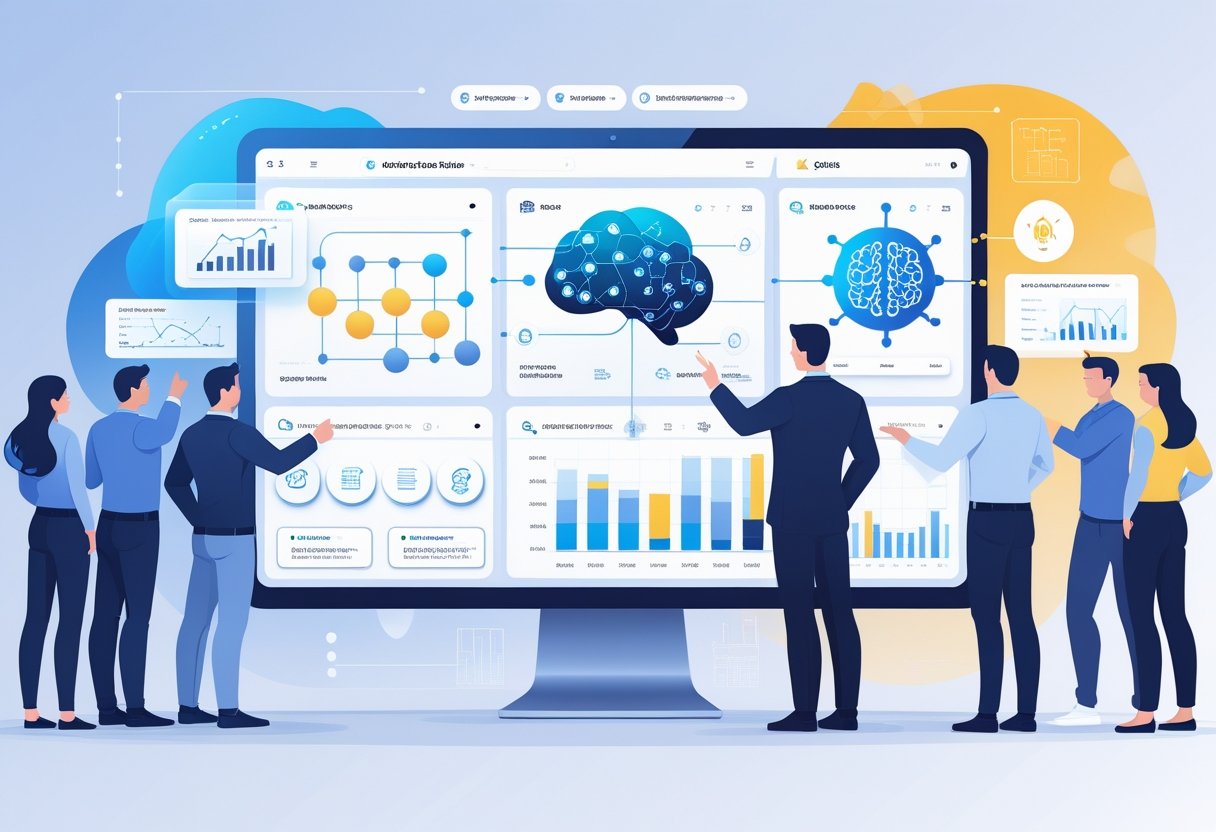
A group of professionals collaborating around a desk with digital displays showing project timelines and task management visuals.

These tools can handle many aspects of project planning, like tracking progress, predicting risks, and optimizing workloads. By making it easier to visualize dependencies and plan accordingly, AI planning tools support better decision-making and help avoid common project pitfalls.

Many platforms now combine AI with project management features to boost productivity. They assist teams in real-time collaboration and keep everyone aligned, improving the overall workflow and making projects run smoother.

Key Takeways

  • AI tools automate and prioritize tasks for better project management.
  • They help predict risks and optimize team resources.
  • Real-time collaboration improves team coordination and workflow.

Core Features of AI Planning Tools

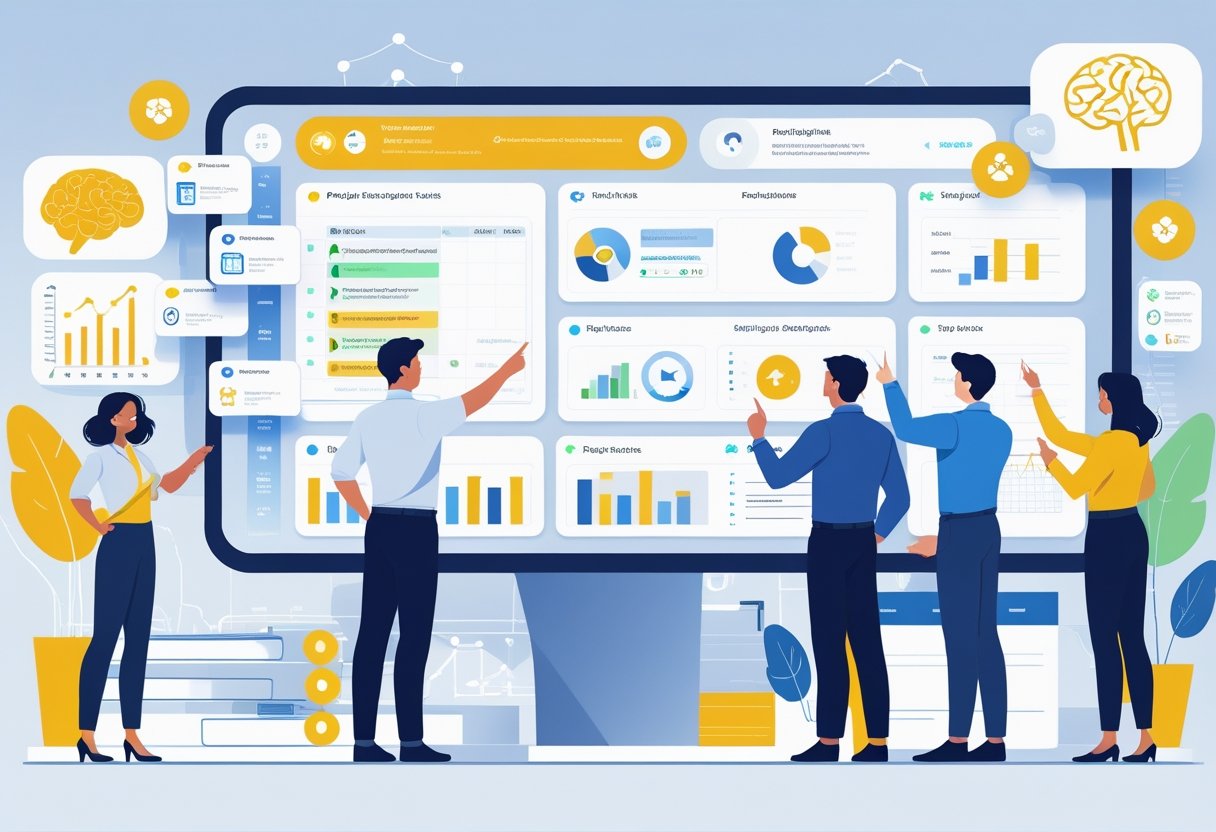
A digital dashboard showing interconnected tasks and timelines for AI project planning, with professionals collaborating around a computer screen.

AI planning tools combine several important functions that help teams organize projects, manage tasks, and automate workflows. These tools use smart technology to improve accuracy and efficiency in daily project activities. They enable better tracking and decision-making by using data in real time.

Project Planning and Task Management

AI planning tools provide structured ways to organize projects from start to finish. Users can break projects into tasks, assign deadlines, and track progress easily. These tools often include visual boards like Kanban or Gantt charts to map out timelines and dependencies clearly.

Task management features ensure every task is prioritized and assigned based on team availability and skill sets. Users get notifications about deadlines and project updates to stay on schedule. AI helps identify task bottlenecks early, allowing teams to reallocate resources quickly.

These tools support collaboration, enabling comments, file sharing, and real-time updates. This centralization reduces errors from scattered communication and manual tracking. Overall, AI planning tools create a clear framework for managing complex projects efficiently.

AI Capabilities in Modern Tools

Modern AI planning tools use machine learning and natural language processing to enhance project workflows. They analyze past project data to predict risks and identify potential delays before they happen. This predictive insight helps managers plan better and avoid surprises.

AI can suggest task priorities, automate status updates, and summarize project reports automatically. Some tools include AI assistants that respond to queries or help manage tasks via chat or voice commands.

Data-driven decision-making is another key feature, where AI analyzes large datasets to recommend optimal strategies. This reduces guesswork and supports more informed choices. AI capabilities also improve resource allocation by considering workload and skills dynamically.

Workflow Automation and Automations

Workflow automation is central to AI planning tools, removing repetitive manual tasks from project teams. Automations handle actions like scheduling meetings, sending reminders, or updating task statuses without human input.

Users can set custom triggers and rules to automate steps within project processes. For example, when a task is marked complete, the tool might automatically assign the next task or notify stakeholders.

Automation improves consistency and speeds up workflows. It also reduces human error related to manual entries or missed updates. Some AI tools integrate with communication platforms to streamline team collaboration further.

By automating routine work, teams focus more on strategic planning and problem-solving rather than administrative duties. This supports higher productivity and better project outcomes.

Managing Projects and Tasks With AI

A group of professionals collaborating around a large digital display with project timelines and AI-generated data visualizations in a modern office.

AI enhances how teams plan and execute projects by automating scheduling, assigning tasks, managing resources, and tracking progress. It helps maintain clear project timelines, balances workloads based on team capacity, and improves project visibility. These tools reduce manual work and support better decision-making.

Project Scheduling and Timelines

AI-powered project scheduling tools analyze deadlines, task dependencies, and team availability to create accurate project timelines. They automatically adjust schedules when changes occur, like delays or added tasks, minimizing the risk of missed deadlines.

These tools also prioritize tasks based on urgency and resource availability, helping teams focus on what matters most. By integrating calendars and timelines, AI tools offer a clear visual overview of the project’s flow, enabling managers to foresee bottlenecks early and reallocate tasks quickly.

Automated reminders and updates keep the entire team aligned with real-time schedule changes, ensuring consistent progress.

Task Assignment and Tracking

AI streamlines the process of assigning tasks by analyzing each team member’s skills, current workload, and availability. It creates optimized task lists that improve efficiency and reduce bottlenecks.

Tracking tools powered by AI monitor task completion statuses continuously. They provide alerts on overdue or at-risk tasks, keeping project managers informed without constant manual checks.

AI can generate summaries of task updates, helping teams stay focused without reading through numerous messages. It also assists in writing clear, concise task descriptions and status reports, reducing communication errors.

Resource and Workload Management

Effective resource management relies on AI to match team capacity with project demands. AI tools predict workload distribution by evaluating task complexity and team availability, preventing burnout and underuse.

They enable managers to balance work by reallocating resources when schedules shift or projects expand. AI also supports budget control by linking resource use to costs, helping avoid overspending.

With real-time dashboards, project visibility improves, making it easier to track who is working on what and forecast future resource needs.

Milestones and Progress Tracking

AI-driven progress tracking creates automated reports on milestones and key deliverables. It compares actual performance against planned schedules to highlight any delays.

These tools generate clear visual summaries that show completed tasks, upcoming deadlines, and remaining work. This improves stakeholder communication and helps prioritize critical milestones.

AI also identifies risks early by analyzing project trends and patterns, enabling proactive management. Continuous updates and detailed recaps give teams the insights needed to stay aligned and meet goals on time.

Top AI Planning Tools for Projects and Tasks


AI planning tools help teams manage tasks efficiently by automating routine work and improving visibility into project progress. These tools often include features like task prioritization, real-time updates, and smart scheduling to keep projects on track. Many also offer flexible views and reporting options to fit different workflows and organizational needs.

Overview of Leading Platforms

Several AI-powered platforms are popular for project and task management. Asana and ClickUp stand out for their automation and AI-driven suggestions that improve task prioritization. Monday.com uses AI to predict project risks and optimize timelines, while Wrike offers smart workload management and custom workflows.

Jira focuses more on software teams, combining AI with agile practices. Trello and Taskade provide user-friendly Kanban setups enhanced with AI-powered task recommendations. Platforms like Smartsheet and Forecast integrate AI with strong resource and budget tracking.

Most of these platforms support mobile apps and external integrations, enabling teams to stay connected and manage projects from anywhere.

Kanban Boards and Gantt Charts

Kanban boards remain a favorite visual tool, widely used in Trello, ClickUp, and Taskade. These boards help users track task progress through drag-and-drop cards. AI features in these tools can automatically sort tasks by priority or deadline to reduce manual organizing.

Gantt charts are crucial for timeline tracking and resource allocation. Platforms like Smartsheet, Wrike, and Monday.com offer dynamic Gantt views that update automatically as tasks change. AI in these tools can forecast delays and suggest adjustments to keep deadlines realistic.

Both Kanban and Gantt views are often enhanced with additional features like timeline views and calendar syncing, helping teams visualize workloads across time and manage overlapping tasks clearly.

Custom Dashboards and Reporting

Customizable dashboards are essential for tracking key metrics and project health. Tools like Asana, ClickUp, and Wrike provide drag-and-drop dashboards that can display task statuses, team performance, or budget use. AI can highlight risks or bottlenecks in these views.

Reporting options vary but often include real-time updates, trend analysis, and exportable reports. AI-powered analytics help uncover hidden patterns, like recurring delays or task dependencies, enabling proactive decision-making.

Platforms increasingly allow users to tailor dashboards with widgets and integrations. This flexibility supports teams of all sizes and industries in focusing on what matters most at a glance.

Collaboration and Real-Time Coordination

Successful AI planning tools for projects focus heavily on helping teams work together instantly and clearly. They provide features that allow teams to see project progress live, share updates quickly, and keep tasks organized no matter where members are located.

Real-Time Collaboration Features

AI planning tools often include real-time dashboards that show project status and task completion as they happen. This boosts project visibility for managers and team members alike, helping spot delays early.

Many tools use drag-and-drop interfaces to move tasks between stages or assign new work. This makes updating plans fast and reduces confusion. Integrated timesheets and time tracking help teams log hours directly in the system, improving accuracy and simplifying reporting.

Document sharing and live editing features allow multiple team members to work on files simultaneously. This avoids version conflicts and speeds up feedback cycles, especially in design or content-heavy projects.

Team Communication Tools

Clear, instant communication is vital in project management. AI tools include built-in chat, comment threads, and discussion boards to keep all conversations tied to specific tasks or projects.

Some platforms allow creating channels for different teams or project topics to organize dialogue better. This helps reduce email usage and keeps conversations centralized.

Notifications and alerts update team members on task changes or deadlines. While useful, managing notification overload is key for maximizing focus and minimizing distractions.

Managing Projects On the Go

Mobile apps expand AI planning tools’ reach by enabling teams to check updates, manage tasks, and communicate from anywhere. This supports remote work and quick decision-making outside the office.

On mobile, users can view real-time dashboards and adjust schedules on the fly. Time tracking and timesheet submissions are often built in, ensuring accurate records regardless of location.

Mobile usability is critical; a clean, responsive interface helps users interact with complex project data easily. This flexibility keeps teams connected and productive throughout the project lifecycle.

Frequently Asked Questions

AI tools for project management help teams organize tasks, manage resources, and track progress with greater accuracy and speed. They often include automation, real-time collaboration, and smart scheduling features.

What are the top free AI tools available for project management?

There are several free AI-powered tools that assist with project management. Microsoft Planner offers AI features for task tracking and chatbot support. Trello provides automation through Butler, which helps with task management.

Other options include ClickUp and Asana, which have free versions with AI-enhanced features like smart notifications and workflow automation. These tools help teams stay organized without a subscription fee.

How can AI enhance project planning and execution?

AI improves project planning by forecasting risks and timelines using data analysis. It automates routine tasks such as updating schedules and assigning resources, saving time.

During execution, AI provides real-time insights on project status and potential bottlenecks. It also supports better communication by offering chatbots and smart reminders to keep teams on track.

What are the key features to look for in an AI project management tool?

Important features include task automation, resource optimization, timeline prediction, and integration with other software. AI-driven analytics and reporting help teams make informed decisions.

Real-time collaboration tools and AI-powered chatbots improve communication. Ease of use and adaptability to different project types also matter.

Are there any AI project management certifications available for professionals?

Yes, professionals can pursue certifications that focus on AI in project management. Organizations like PMI offer courses covering AI tools and digital project delivery.

These certifications teach how to apply AI techniques to improve project outcomes. They often include training on AI-driven software and data analysis.

Which AI task managers offer the best features without a subscription?

Free AI task managers such as Microsoft To Do and Google Tasks provide basic AI-driven organization. They integrate well with other productivity apps.

Trello's free plan with automation and ClickUp's free tier also offer strong AI capabilities. These tools allow users to manage tasks intelligently without paying.

What has been the experience of Reddit users with AI tools for project management?

Reddit users report varied experiences. Many appreciate AI features that reduce manual work and increase efficiency. However, some mention limitations in customization and occasional inaccuracies.

Users often recommend trying several tools to find the best fit for specific needs. Community feedback emphasizes the importance of easy integration and user-friendly design.

Saturday, November 29, 2025

Prompting Importance Books: Learn Prompts for Effective Education


Prompting plays a critical role in education by guiding students’ thinking and encouraging deeper engagement with material. Books focused on prompting help educators craft effective questions and strategies that lead to richer classroom discussions and improved learning outcomes. The most important value they offer is teaching how to design prompts that are clear, purposeful, and tailored to support student understanding and participation.


These resources emphasize practical techniques for setting realistic discussion goals, breaking down complex tasks, and refining questions to stimulate meaningful dialogue. By mastering the art of prompting, teachers can foster an inclusive environment where students are prepared and motivated to contribute thoughtfully. The careful use of prompts also aligns instruction with educational standards and learning objectives.

Exploring the insights shared in prompting books can transform how educators interact with students, shaping how knowledge is constructed and shared. This focus on quality questioning is increasingly important in today’s classrooms, where encouraging critical thinking is a central goal of effective teaching. For more on setting goals and preparing for discussions, see Prompting Deeper Discussions.

The Role of Prompting in Education

A classroom scene with a teacher guiding diverse students using books and digital devices, surrounded by educational symbols on a board.

Prompting is a crucial strategy in education that supports learners in acquiring new skills or behaviors by providing varying levels of assistance. Effective use of prompts shapes the learning experience, ensuring students can successfully engage with tasks while developing independence over time. Educators must carefully select prompt types and timing to optimize progress without causing reliance.

Definition and Core Principles

Prompting involves giving cues or supports to guide a learner toward a correct response or behavior. It aims to reduce errors while skill acquisition occurs, often described as part of an errorless learning approach. The core principle is to provide just enough help for the student to succeed but not so much that it hinders independent problem-solving.

Prompts can be verbal, gestural, visual, or physical. Key to prompting is the gradual fading of assistance, encouraging the learner to perform the skill unaided eventually. This process supports mastery by reinforcing correct responses and building confidence.

Types of Prompts Used by Educators

Educators utilize a range of prompt types tailored to the learner’s needs and the task complexity. Common prompts include:

  • Verbal prompts: Spoken hints or instructions.
  • Gestural prompts: Physical gestures like pointing or nodding.
  • Modeling: Demonstrating the desired behavior or action.
  • Visual prompts: Use of images, diagrams, or written cues.
  • Physical prompts: Hand-over-hand guidance or light touch.

The choice depends on the learner’s developmental level and the learning environment. Combining multiple prompts can enhance effectiveness, but educators must monitor for over-prompting.

Balancing Assistance and Independence

Effective prompting balances providing help with fostering learner autonomy. Too much assistance can lead to prompt dependency, reducing motivation to try independently. Conversely, too little support may result in frustration and disengagement.

Educators plan prompting hierarchies, starting with more intrusive prompts and gradually decreasing assistance levels. Continuous assessment of student responses guides this process. This strategic fading is essential for transferring skills from guided to independent performance, making prompting a dynamic, tailored instructional tool.

For more detailed strategies on prompt use and its impact on engagement, see effective prompting in educational settings.

Comprehension and Critical Thinking Through Prompts

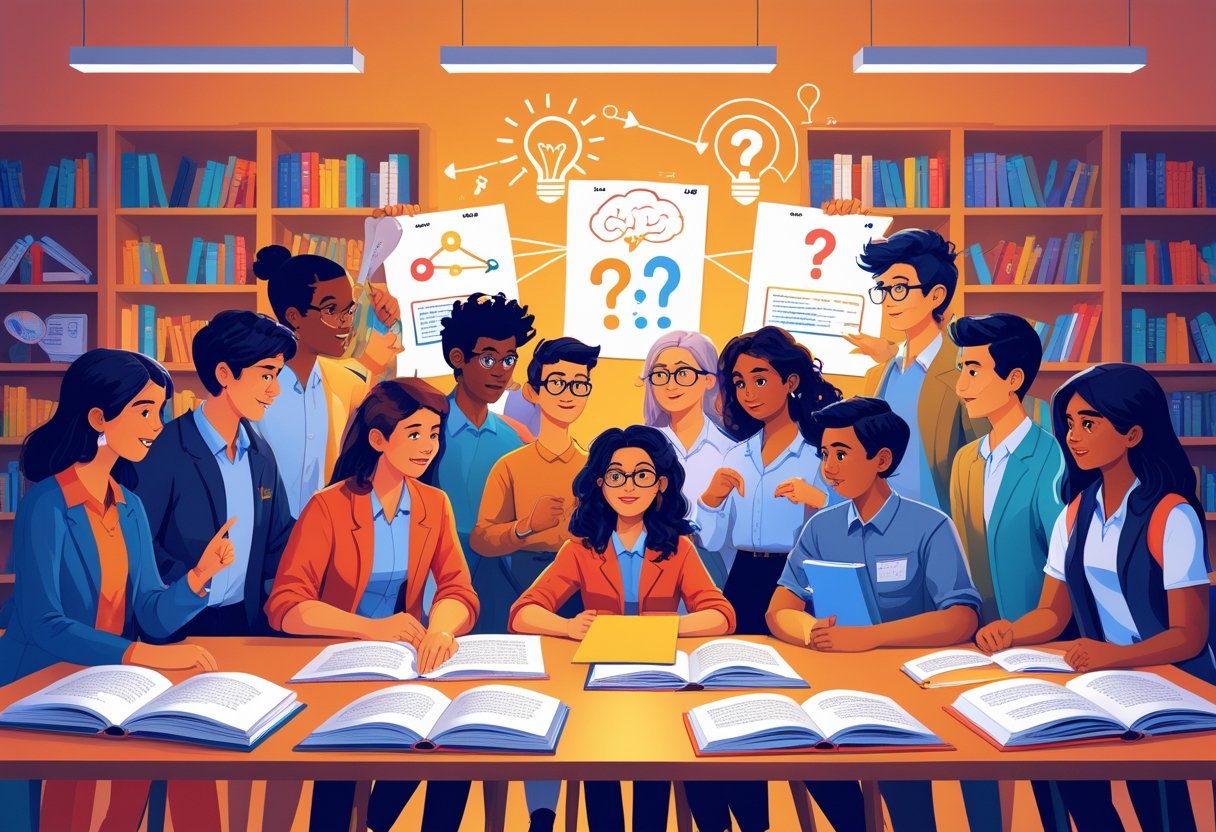
A group of students and a teacher gathered around a table with books and tablets, engaged in discussion and learning in a classroom filled with educational materials.

Effective prompts play a vital role in deepening a learner's engagement with texts. They help clarify understanding, challenge assumptions, and encourage learners to extend their thinking beyond surface-level facts. Thoughtful use of prompts supports both comprehension and the development of critical thinking skills.

Boosting Understanding Using Prompts

Prompts focused on comprehension guide learners to identify key facts, summarize ideas, and explain concepts in their own words. For example, questions asking learners to describe important events or define unfamiliar vocabulary improve retention and clarify meaning.

Such prompts encourage active reading. Learners move beyond passive recognition of words to grasping the material’s significance. This foundation is crucial for later application and higher-level analysis.

Using structured prompts helps learners break down complex information into manageable parts. This scaffolding enhances their capacity to understand and recall details accurately, supporting stronger learning outcomes.

Encouraging Critical Analysis in Learners

Critical analysis requires learners to evaluate relationships within the text and consider underlying motives or biases. Prompts that ask learners to compare characters, analyze turning points, or evaluate an author’s choices push students to examine deeper layers of meaning.

These types of questions cultivate skepticism and sharpen reasoning skills. Learners practice identifying patterns, exploring cause and effect, and challenging assumptions rather than accepting information at face value.

By engaging with such prompts, learners develop the ability to articulate thoughtful judgments and build evidence-based arguments, essential components of rigorous critical thinking.

Scaffolding Higher-Order Thinking

Prompts aligned with higher levels of Bloom’s Taxonomy encourage synthesis and application of knowledge in novel contexts. Tasks like creating new endings, imagining character reactions, or proposing solutions require learners to generate original ideas.

This scaffolding fosters creativity while strengthening cognitive flexibility. It helps transition learners from understanding existing content to manipulating and applying it actively.

Higher-order prompts serve as bridges, guiding learners from mastery of basic facts to sophisticated skills such as problem-solving and innovation. They deepen intellectual engagement and extend learning beyond the text.

Promoting Self-Reflection

Self-reflective prompts encourage learners to connect meaningfully with the material by examining their responses and thought processes. Questions about personal impact, questions they would ask characters, or themes they relate to encourage introspection.

Reflection builds metacognition—awareness of one’s own thinking—which enhances comprehension and critical evaluation. Learners become more aware of biases, preferences, and growth areas.

Integrating self-reflection into reading routines supports deeper comprehension and critical engagement by making learners active participants in their own intellectual development.

For more detailed ideas on how structured prompts improve comprehension and foster critical thinking, see 35 thought-provoking reading journal prompts based on Bloom’s Taxonomy.

Effective Strategies for Learning Prompts

Effective learning prompts require intentional design to maximize their impact. Techniques that demonstrate the expected response, adjust to learner differences, and personalize engagement all contribute to better comprehension and application of new skills.

Modeling and Demonstration Techniques

Modeling involves showing learners exactly how to approach a task before expecting independent work. This technique clarifies expectations and provides a concrete example for learners to imitate. By demonstrating the use of prompts in context, teachers help students visualize the learning process, making abstract instructions more tangible.

For example, an instructor might solve a sample problem aloud, verbally explaining each step. This method supports learners in understanding not only what to do but how to think through challenges.

Frequent use of modeling ensures prompts do not remain vague requests but become actionable guides. It also reinforces proper use of prompts and deepens the learning experience by linking theory with real application.

Adapting Prompts for Diverse Learners

Not all learners respond similarly to the same prompts. Effective prompting considers individual differences such as language proficiency, cognitive levels, and cultural background.

Adjusting the complexity, language clarity, and format of prompts ensures accessibility. For instance, simplifying vocabulary or providing visual aids alongside verbal prompts can support learners with different needs.

Using a tiered prompt approach, where assistance starts explicit and gradually fades, helps learners develop independence. Tailoring prompts encourages inclusivity and allows each learner to engage with content at an appropriate challenge level.

Personalizing Prompts for Engagement

Prompts that connect with a learner’s interests or experience increase motivation and focus. Personalizing prompts means customizing questions or tasks to relate to the learner’s background or goals.

For example, asking a student to describe a scientific principle using examples from a hobby they enjoy integrates relevance, making learning more meaningful.

Effective personalization involves understanding learners’ preferences and adjusting prompts accordingly. This strategy fosters deeper engagement and encourages active application of knowledge beyond passive response.

Books and Resources to Learn Prompts in Education

Understanding effective prompting requires accessible resources that offer practical strategies and theoretical insights. Educators benefit from materials that explain how to craft questions that deepen learning and improve student engagement. Combining these resources with real-world techniques supports better teaching outcomes and student development.

Recommended Books on Prompting

Several key texts explore the art and science of prompting in education. Prompting Deeper Discussions: A Teacher’s Guide to Crafting Great Questions by Matthew R. Kay offers a comprehensive framework for creating questions that stimulate critical thinking and meaningful dialogue. This book includes actionable advice on timing, student readiness, and goal-setting in discussions.

Other notable works address prompting within diverse educational contexts. Books by Kay also explore race conversations and effective communication strategies, which further enrich educators’ prompting knowledge. These resources support educators in refining their questioning techniques to enhance engagement and understanding.

Educational Resources for Educators

Online platforms and curated prompt collections are valuable for educators seeking immediate tools. Websites hosting specialized prompt sets provide educators with high-impact questions tailored for various subjects and learning levels. Some resources emphasize inclusivity and adaptation to diverse learners, ensuring prompts meet different educational needs.

Professional development materials, such as guides on prompt implementation, offer step-by-step approaches in classroom settings. These resources cover verbal, visual, and modeled prompting methods, helping educators determine the right level of support for each student. Educators can also explore how AI-generated prompts affect learning and adapt strategies accordingly.

Integrating Knowledge From Prompts Into Practice

Applying prompting knowledge effectively involves more than understanding theory; it requires practical integration into daily instruction. Educators should align prompts with clear instructional goals and student needs. Setting realistic yet ambitious discussion objectives sharpens focus and encourages purposeful engagement.

Teachers must also be agile in delivering prompts, adjusting based on student responses and participation. Monitoring when and how to scaffold prompts is critical, as excessive assistance can hinder independent thinking. Integrating prompting into classroom routines helps build students’ critical-thinking, communication, and reflection skills over time.

For further development in prompt crafting and application, educators may consult specialized guides that combine research with practice to optimize learning outcomes.

Frequently Asked Questions

Effective prompting requires clarity, precision, and intentional design to meet specific educational goals. Understanding key concepts and practical methods improves both the creation and application of prompts in learning environments.

What are the best practices for creating prompts for generative AI?

Best practices include starting with clear, action-oriented instructions and breaking complex tasks into smaller, manageable parts. Reusing successful prompt patterns and validating AI responses for accuracy and relevance are essential. Being explicit about style, tone, and format helps ensure outputs meet expectations.

How can one access a free course on AI prompting techniques?

Several online platforms and educational websites offer free or trial-based courses on AI prompting. Providers often include structured lessons, examples, and exercises to build practical skills in creating effective prompts.

What are some examples of effective AI prompts for generating images?

Effective image generation prompts specify the subject, style, and mood clearly. For instance, a prompt like “Create a photorealistic image of a sunset over a mountain lake with warm colors” guides the AI to produce coherent visuals suited to the request.

Can you explain the concept of prompt literacy and its relevance in education?

Prompt literacy is the ability to craft, interpret, and refine prompts to direct AI outputs meaningfully. In education, it equips both teachers and students to use AI tools efficiently, enhancing lesson planning, personalized learning, and critical thinking skills.

What is considered the prompt hierarchy used in educational settings?

The prompt hierarchy moves from simple, recall-based questions to complex, analytical or creative tasks. This structure aligns with cognitive taxonomies like Bloom’s, helping educators scaffold learning and promote deeper understanding.

How are prompts utilized in teaching to enhance learning outcomes?

Teachers use prompts to spark critical thinking, guide discussions, and tailor feedback. Well-designed prompts increase student engagement, support diverse learning needs, and help in assessing comprehension and application of knowledge.

For more insights on crafting effective prompts, explore this guide for teachers on creating effective prompts.

Mastering Prompting: Your Key to Unlocking All AI Benefits Effectively


Mastering prompting is the best way to unlock the full benefits of AI. The quality of the words and questions used shapes how well AI understands and responds. Clear and precise prompting leads to more accurate, relevant, and useful AI outputs.

Anyone who learns to craft effective prompts can improve the clarity and creativity of AI’s answers. This skill is becoming essential as AI tools grow more common across work and daily life. By mastering prompting, people gain better control over AI’s power to solve problems and generate ideas.

The right prompting techniques boost productivity and make AI tools easier to use. As AI continues to advance, understanding how to communicate well with it will keep users ahead. Those who invest in mastering prompting will get the most value from their AI interactions.

Key Takeaways

  • Good prompts improve AI response quality.
  • Prompting skills increase productivity with AI tools.
  • Clear communication unlocks AI’s full potential.

Understanding Prompting in AI

Prompting is the foundation of working effectively with AI. It involves crafting inputs that guide AI systems to generate useful, accurate, and relevant outputs. To use AI well, one must understand what prompting is, the different types of prompts, and how this practice has changed over time.

What Is Prompting?

Prompting is the process of giving instructions or questions to an AI to get a specific response. It is more than just typing words; it requires thought about how the AI interprets language and data.

A good prompt leads the AI to produce clearer, more accurate, and relevant answers. It helps the user communicate their needs precisely. For instance, adding context or specifying the task makes the AI’s results more useful.

Users must consider the AI's limitations and structure prompts accordingly. Prompting turns simple commands into powerful tools for problem-solving, creativity, and information gathering.

Types of Prompts

Prompts come in different forms, each suited for particular goals:

  • Instructional Prompts: Direct the AI to perform a task, like "Summarize this article."
  • Question Prompts: Ask the AI to provide information or explanations.
  • Contextual Prompts: Include background information to guide the AI’s response.
  • Example-Based Prompts: Provide examples so the AI can mimic the style or format.
  • Creative Prompts: Encourage the AI to generate ideas, stories, or images.

Choosing the right type affects the quality of the AI’s output. Mixing prompt types can also improve clarity and depth.

Evolution of Prompt Engineering

Prompt engineering began as simple instruction writing but has grown into a complex skill. Early users gave short, vague prompts and got less useful results.

Over time, it became clear that the choice of words and structure matters greatly. Users now design detailed prompts that include examples, constraints, and clear goals.

Advanced techniques also teach how AI models work, helping users avoid biases and errors. This evolution has made AI more accessible and reliable in fields like education, business, and art.

Today, prompt engineering is a key skill to unlock AI’s full potential through precise and thoughtful communication.

Strategies for Mastering Prompting

Effective prompting requires clear goals, careful wording, and ongoing adjustment. It is important to focus on clarity, avoid common errors, and test prompts step-by-step to improve results. These steps lead to better AI responses and more useful outcomes.

Best Practices for Crafting Effective Prompts

Prompts should be specific and clear. Vague or broad prompts often lead to unsatisfactory answers. It helps to include key details like context, desired format, or examples. For instance, instead of asking, "Tell me about space," a better prompt would be, "Explain the main phases of the moon in simple terms."

Use simple language and avoid jargon unless necessary. Clear instructions guide the AI more effectively. Adding constraints such as word count or style can tailor responses for specific needs.

Breaking complex questions into smaller parts also improves response quality. This guides the AI through the process and reduces confusion.

Common Mistakes to Avoid

One common mistake is being too vague or ambiguous. Without clear direction, AI may guess your intent and provide irrelevant answers. Overloading a prompt with too many requests reduces focus and quality.

Another frequent error is ignoring context. AI responds better when given background information or goals. For example, telling the AI if the response is for a report, email, or casual conversation changes the tone and detail.

Some users expect perfect results on the first try. Skipping refinement leads to wasted time and frustration. Understanding AI limits and adjusting expectations is key.

Iterative Testing and Refinement

Prompting is rarely perfect at first. Testing different phrasing helps find what works best. Changing word order, adding details, or using examples often leads to better answers.

Users should compare outputs from multiple prompts to see which matches their goal. This trial-and-error approach is essential. Small tweaks can fix problems like unclear answers or missed details.

Keeping a record of successful prompts builds a useful reference over time. Feedback also helps. Checking if the AI understood correctly and making corrections guides future prompts.

This process leads to more precise, relevant responses and optimizes efficiency.

Unlocking AI Benefits Through Improved Prompting

Effective prompting helps users get more useful and precise results from AI. It improves how AI handles tasks, generates ideas, and delivers information. This skill directly affects productivity, creativity, and the accuracy of AI outputs.

Enhancing Productivity

Improved prompting saves time by making AI responses more relevant and focused. When prompts are clear and specific, AI requires fewer follow-up questions. This reduces the back-and-forth and speeds up task completion.

For example, in coding or content creation, precise prompts help AI understand exactly what is needed. This means users spend less time editing and refining AI outputs. Clear prompts also help automate routine tasks, allowing people to focus on more important work.

Effective prompting turns AI into a reliable assistant, boosting workflow efficiency in business or personal projects.

Driving Innovation and Creativity

Mastering prompting unlocks AI’s creative potential. Users can guide AI to explore new ideas or approaches in writing, design, or problem-solving. By using detailed and imaginative prompts, they encourage AI to generate unique content or suggest innovative solutions.

AI can combine information in novel ways when given open-ended prompts with clear boundaries. This leads to fresh perspectives that may not emerge through traditional thinking alone.

Prompting empowers users to push AI beyond basic outputs and use it as a creative partner.

Boosting Accuracy and Relevance

The quality of AI’s answers depends largely on prompt clarity. Precise wording, context, and constraints help AI focus on the right details. This reduces errors and keeps responses relevant to the user’s needs.

For example, supplying specific data points or clear goals guides AI to produce more accurate summaries or analyses. Ambiguous prompts often cause vague or off-target answers.

Good prompting is especially important in areas like research, data analysis, and customer support, where accuracy is critical. It ensures AI outputs are trustworthy and useful.

Future Trends and Skills in Prompt Engineering

A group of people collaborating around a futuristic touchscreen displaying AI icons and data in a modern high-tech workspace.

Prompt engineering is evolving rapidly, requiring new tools, adaptable abilities, and close attention to how AI models develop. To stay effective, one must focus on optimizing prompts using advanced software, building skills that apply broadly, and adjusting to the fast growth of AI capabilities.

Emerging Tools for Prompt Optimization

New tools are designed to help users write better prompts faster and with more precision. These include platforms that analyze prompt performance, suggest improvements, and enable batch testing across various AI models. Features like prompt versioning and collaborative editing are becoming common, making it easier to refine ideas and share work.

Some tools use AI-driven analytics to identify weak spots in prompts, recommend clearer language, or optimize for specific outputs like summaries, code, or creative writing. These innovations reduce guesswork and speed up the learning curve for both beginners and experts.

Integrating these tools into workflows allows users to craft more effective prompts, leading to better AI responses and higher productivity.

Building Transferable Skills

Mastering prompt engineering today means developing skills that apply across different AI platforms and tasks. This includes a strong understanding of how language models interpret input and learning to anticipate AI behavior under various contexts.

Critical thinking and creativity both matter. Skilled prompt engineers think carefully about word choice, structure, and context clues. These skills support tasks ranging from customer support automation to data analysis.

Additionally, ethical awareness is crucial. Practitioners should learn to craft prompts that avoid bias and respect privacy. Transferable skills like these ensure longevity in a field that changes as AI models improve.

Adapting to Evolving AI Capabilities

Large language models and multimodal AI tools are advancing quickly. New models combine text, images, and other data formats, requiring prompts that work across different types of inputs.

Prompt engineers must stay updated on changes to AI architectures and training methods. This includes understanding updates like expanded context windows or changes in model reasoning abilities.

People who adapt by revisiting and refining their prompting strategies will get the best results. They learn to take advantage of new features while navigating any limitations. Continuous experimentation and monitoring of AI responses become essential parts of their approach.

Frequently Asked Questions

A person thoughtfully engaging with a large digital interface displaying abstract AI symbols and data streams.

Effective AI prompting relies on clear techniques, practical examples, and understanding the elements that influence how AI responds. Learning resources and prompt structures help users get the best results from generative AI tools.

What are the essential techniques for creating effective AI prompts?

Creating effective AI prompts involves being clear, specific, and concise. Including relevant context helps the AI understand what is needed.

Iterating on prompts by refining words or adding details leads to better and more accurate responses. Using structured formats can also guide the AI more efficiently.

How can one learn AI prompting through free online courses?

Many platforms offer free courses covering AI prompting basics. These courses teach how to write clear instructions and understand the AI’s behavior.

Some lessons focus on prompt engineering principles and provide hands-on practice with tools like ChatGPT or Midjourney. This helps learners apply techniques directly.

What are the key factors that make an AI prompt successful?

A successful prompt is clear, specific, and provides enough context for the AI to grasp the task. It should avoid ambiguity and use simple language.

Including examples or desired output format also increases accuracy. Revising prompts based on the AI’s replies is important to improve clarity.

In what ways do prompts improve AI-generated content?

Well-crafted prompts guide the AI to produce relevant, accurate, and useful content. They determine how detailed or creative the output will be.

Good prompts save time by reducing the need for corrections. They allow users to tailor responses to specific needs or styles.

What are some examples of AI prompts for image generation?

Examples include requests like: “Create a sunset landscape with mountains and a river,” or “Draw a futuristic cityscape at night with neon lights.”

Clear descriptions of colors, style, objects, and mood help image AI tools generate visuals closer to the user’s vision.

How can one design prompts to fully leverage the capabilities of generative AI?

Designing prompts involves combining clarity with enough detail to highlight the AI’s strengths. Using explicit instructions about style, tone, or format is key.

Testing and adjusting prompts based on output feedback helps unlock full potential. Including constraints or goals in the prompt also guides the AI’s creativity effectively.